

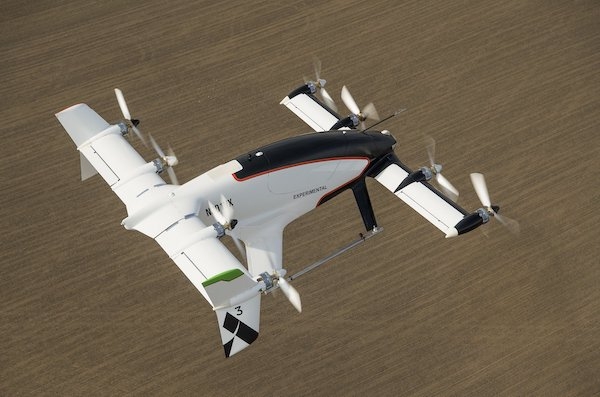
It has been four years agon, when Vahana concept was sketched on a napkin. This flagship programme that launched the urban air mobility initiative at Airbus. Now it has come to a close. Vahana’s key learnings are now providing Airbus Urban Mobility with invaluable insight on the design of its future urban air vehicle. “It all started with a sketch on a napkin…” The Vahana story— when told by project team members—often starts this way. Some tell the story with a hint of wonder, others with a tinge of nostalgia. Indeed, Vahana becomes a legend in its own right. And it is not hard to see why: a design that looked pulled from a sci-fi movie has quietly transformed into a fully operational electric vertical take-off and landing (eVTOL) vehicle in only a few short years.
The early sceptics can be forgiven: 2016 was a different time. Back then, no one could have predicted that leveraging the sky to improve urban mobility was practical. And yet, urban air mobility is no longer the stuff of science fiction. Today, it is one of the most exciting and promising markets in aerospace. And the extraordinary progress of Vahana has undoubtedly played a key role in bringing this vision closer to reality. "Learnings from both aircraft—Vahana and CityAirbus—will be used to advance our relationship with regulators and to understand key technologies" Zach Lovering, VP of UAM Systems, Airbus.
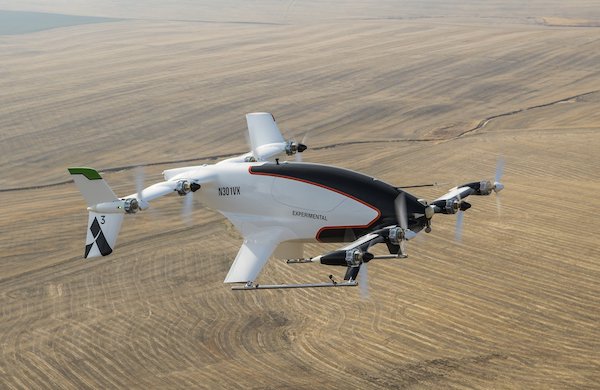
But, as the saying goes, all good things must come to an end. For Vahana, that day has come. On 14 November 2019, the final page of the Vahana story was written at the Pendleton UAS Range in Oregon, USA. Here, Vahana took its final test flight to the cheers (and some tears) of all those who have closely contributed to its extraordinary development.
Now as the dust settles on Vahana’s final flight, the next chapter in urban air mobility at Airbus is already taking shape.
A rich reservoir of key learnings on eVTOL technologies
From the outset, Vahana was designed as a technical demonstrator project. In the R&D community, “technical demonstrators” are commonly used to test high-potential technologies and to support their transfer to real-world applications. In other words, Vahana was never intended to become a commercialised product—instead, the Vahana team based at Acubed
in Silicon Valley was tasked with important objectives relating to eVTOL development.
Zach Lovering, VP of UAM Systems at Airbus and head of Vahana, highlights the programme’s three main objectives:
The future is friendly for urban air mobility
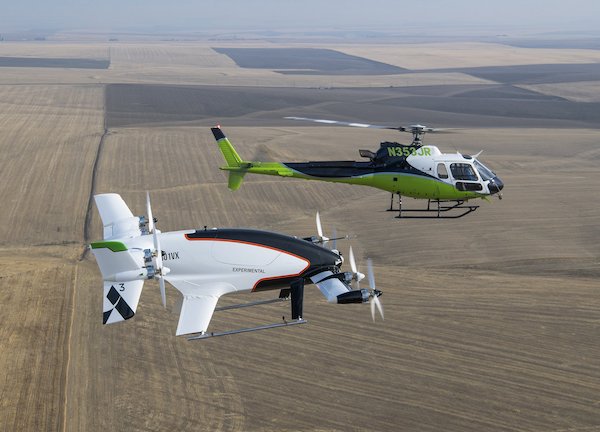
Now that the Vahana programme has been completed, the project team is looking forward to applying the lessons learned to the future urban air vehicle at Airbus. And they will be in good company: the project team for CityAirbus—the second eVTOL demonstrator in the Airbus portfolio—will continue its flight test campaign throughout 2020 to be able to bring fresh insight to the concept development table.
“It’s bittersweet to see Vahana come to an end,” says Zach, who expressed his thoughts ina blog post. “But learnings from both aircraft—Vahana and CityAirbus—will be used to advance our relationship with regulators and to understand key technologies.”
Although precise timelines for the future vehicle are still to be determined, work on the new design has already begun. Airbus Urban Mobility is tasked with taking the lead on this front.
For the time being, one of the two Vahana “Alpha” aircraft will head to Acubed to act as inspiration for future ground-breaking projects. The other will make an appearance at the 2020 HAI Heliexpo in Anaheim, California.
Archived
6 years ago

Regional turboprop fleets show stark disparities in age, reliability, and economic viability. Many aircraft are approaching end‑of‑life, while others are increasingly difficult to operate as spare‑par...
As the 10th edition of the Riga Aviation Forum was getting ready to open, 50SkyShades — a long‑standing Media Partner of the event — took the opportunity to sit down with Zigmars Vestfals,...
Airbus has officially unveiled a new delivery center at its Jean‑Luc Lagardère site, northwest of Toulouse, marking a significant milestone in the industrial ramp‑up of the A320 Family. Purpose...
Honda Aircraft Company announced the completion of the first wing structure for the HondaJet Echelon test aircraft, marking a pivotal advancement in the program and moving the new light‑jet platform i...