


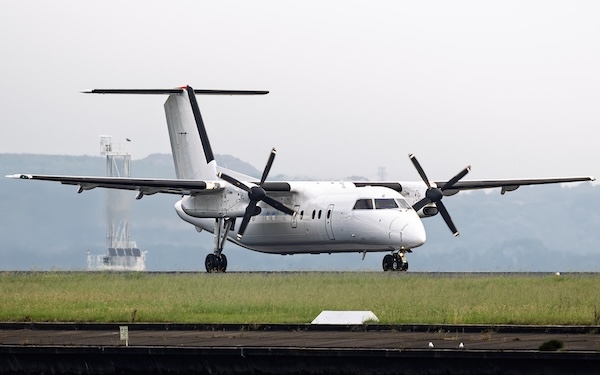
Regional turboprop fleets show stark disparities in age, reliability, and economic viability. Many aircraft are approaching end‑of‑life, while others are increasingly difficult to operate as spare‑parts supply chains become slower, less predictable, and significantly more expensive. For a growing number of operators, monthly OpEx required to keep ageing fleets airworthy now exceeds the CapEx they would invest in a modern, efficient fleet strategy.
Skytrans’ regional Dash‑8 fleet remains fully supported, stable, and economically sustainable, with no exposure to the ageing‑aircraft challenges affecting many operators across the sector. As an OEM‑backed platform, the Dash‑8 continues to benefit from active support by De Havilland Canada (DHC), ensuring reliable access to spare parts without the supply‑chain disruptions or cost escalations seen elsewhere in the turboprop market.
The Dash‑8 also carries no major capital refurbishment requirements beyond standard mandated maintenance, enabling operators to maximise aircraft life without incurring additional heavy‑investment cycles. This positions Skytrans with a structurally stronger fleet profile and a predictable long‑term cost base.
DHC provides Service Packs that enable airlines under an approved maintenance program to extend Dash-8 aircraft operating life. Norway airline Wideroe has confirmed it already has a large number of Dash-8 100 aircraft operating under the DHC extended life program.
OEM extension programs can extend the lifecycle of a turboprop aircraft by up to 100%, says Gytis Gumuliauskas, CEO of Skytrans Australia.
The Australian regional airline market
Stakeholder feedback on regional air services is drawing a consistent and increasingly urgent picture. These are not isolated complaints about occasional delays — they are accounts from business owners, executives, service providers, regional residents and frequent travellers who have fundamentally changed how they operate. Many no longer book regional flights unless absolutely necessary. Some now drive. Others have shifted meetings online. Charter activity has increased. And across the board, people report lost productivity and rising costs as same‑day regional return travel becomes harder to rely on.
The reasons are uniform: high fares, unreliable regional schedules, and too many trips that fail to run as planned. For businesses, public‑sector organisations and essential regional travellers, this challenge extends far beyond aviation. It is a matter of time, productivity and confidence — and it is reshaping how regional Australia moves.
Ageing aircraft and key regional aviation issues can be resolved. Skytrans presents as a model example. Collaboration and new investment, not just from the public sector, can address key regional aviation issues. Some turboprop aircraft fleets and their operators are struggling because those aircraft are no longer being manufactured. In the case of operators with Dash-8 turboprop aircraft fleets, like Skytrans, the key programs are built around maintenance, fleet investment and working with the OEM to deliver the significant longevity that is part of the Dash-8 aircraft value proposition.
Aircraft with 30 to 50-seat capacity remain essential for serving many regional and remote communities as well as mining, FIFO and other regional charter operations. These regional routes are often long in distance and few in passenger numbers. With limited new aircraft options capable of meeting the same capacity and operating requirements OEM-supported Dash 8 aircraft remain highly suitable for the long-term viability of Australian regional connectivity” states Skytrans CEO Gytis Gumuliauskas.
Australia’s ageing turboprop fleet is a challenge. But, the dividing line is not simply between old and new aircraft, it is between aircraft with a credible long-term support pathway, like the Dash-8 and those moving towards end-of-life status brought on by limitations in spare part supply chains, or with high capital requirements to refurbish components like engines.
For Skytrans Australia, the continued support of the Dash-8 platform provides greater certainty when planning future regional capacity. It does not remove the eventual need for fleet renewal, but it means replacement decisions can be self-funded from operating cash accruals based on the aircraft’s actual technical and economic condition rather than its age alone.
“Skytrans is long term sustainable and that includes a program of management to continuously upgrade our Dash-8 aircraft fleet,” Gumuliauskas says.
Global trade body The Air Charter Association (The ACA) celebrated another record‑setting edition of Air Charter Expo (ACE’26) on Tuesday, 8 September 2026, delivered in partnership with Busines...
Global Jet Capital has released its sixth annual Business Jet Market Forecast, outlining a confident outlook for the sector. The updated analysis anticipates steady expansion over the next five years,...
Airbus has officially unveiled a new delivery center at its Jean‑Luc Lagardère site, northwest of Toulouse, marking a significant milestone in the industrial ramp‑up of the A320 Family. Purpose...
Boeing and American Airlines announced the successful completion of the first landing gear exchange for a 737 MAX, marking a key milestone as the company extends its longstanding Landing Gear Exchange...