


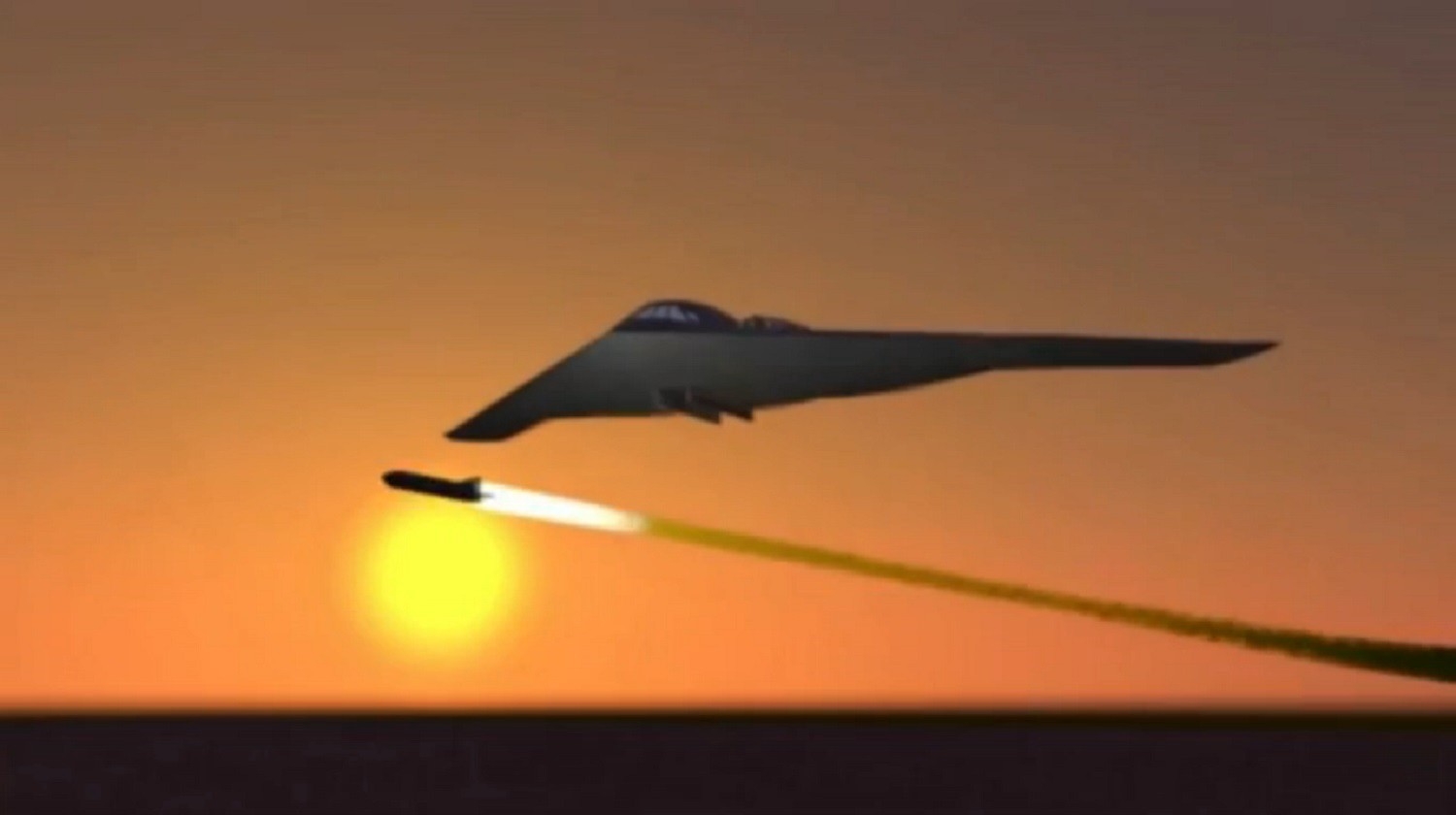
Despite all the hype surrounding the high-power microwave energy weapon known as CHAMP, interest in the computer-frying device assembled and tested by Boeing Phantom Works and the US Air Force Research Laboratory appears stalled.
“There was a lot of activity when we did the demonstration a couple of years ago, and with the budget constraint on the department, they’ve been unable to make it through, to our knowledge,” Phantom Works president Darryl Davis tells Flightglobal at a defence forum in Washington today. “From where it I sit; it has not translated into money or work.”
The Boeing-branded directed energy weapon has caught the attention of some in Congress, who have been lobbying for more investment in the 'counter-electronics high-powered microwave advanced missile project (CHAMP)'.
Air force officials have also expressed interest in maturing the cruise missile-carried payload and mounting it onto the new long-range Lockheed Martin Joint-Air-to-Surface Cruise Missile (JASSM). A repurposed Conventional Air-Launched Cruise Missile (CALCM) was used in the original trial in 2012 at a military range in Utah, where it knocked out rows of computers using bursts of microwave energy.
Boeing's CHAMP is an air-launched, high-powered microwave emitting cruise missile.
AFRL/Boeing
Davis is also seeking for investment in his advanced research and design unit’s unmanned Phantom Eye and Phantom Ray aircraft – which remain in storage in flyaway condition.
At full size, the high-altitude, long-endurance Phantom Eye is advertised to carry a payload weighing up to 907kg (2,000lbs) for ten days, although only a subscale demonstrator has been built so far. A stealthy combat UAV, Phantom Ray was a self-funded project revealed to the public in 2010.
“We did some flight demonstrations for some unique customers,” explains Davis. “We did some data gathering and we’re working with them to understand if there are some opportunities to bring Phantom Eye and Phantom Ray back with additional funding.”
Boeing's Phantom Ray hitches a ride from NASA.
Boeing/NASA
Regarding another potential UAV opportunity, Davis says decision makers within the Pentagon and US Navy are getting closer finalising plans for the Unmanned Carrier-Launched Airborne Surveillance and Strike (UCLASS) competition.
Flying demonstrations with Northrop Grumman’s X-47B wrapped up earlier this year and work has essentially been on pause while the Pentagon re-examines the programme’s requirements and funding.
“We think this is the week where [the Department of Defense] will decide whether to go forward as they finish the 2017 budget submission,” he says. “We get positive signals, but until the navy gives industry guidance, we’re sitting here waiting.”
Northrop Grumman's carrier-based X-47B.
Boeing and American Airlines announced the successful completion of the first landing gear exchange for a 737 MAX, marking a key milestone as the company extends its longstanding Landing Gear Exchange...
ExecuJet MRO Services South Africa, a wholly-owned subsidiary of Dassault Aviation, will be exhibiting at the Africa Aerospace & Defence (AAD) Expo 2026 at Waterkloof Air Force Base in Pretoria (1...
Uzbekistan Airways and Lufthansa Technik have renewed their cooperation with a long‑term agreement extending comprehensive component support for the airline’s Boeing 787 Dreamliner and Airbus A3...
Airbus has officially unveiled a new delivery center at its Jean‑Luc Lagardère site, northwest of Toulouse, marking a significant milestone in the industrial ramp‑up of the A320 Family. Purpose...
TARMAC Aerosave, Europe’s leading specialist in aircraft storage, maintenance, dismantling and recycling, has announced an expanded collaboration with AerFin, the global aviation asset‑managemen...