


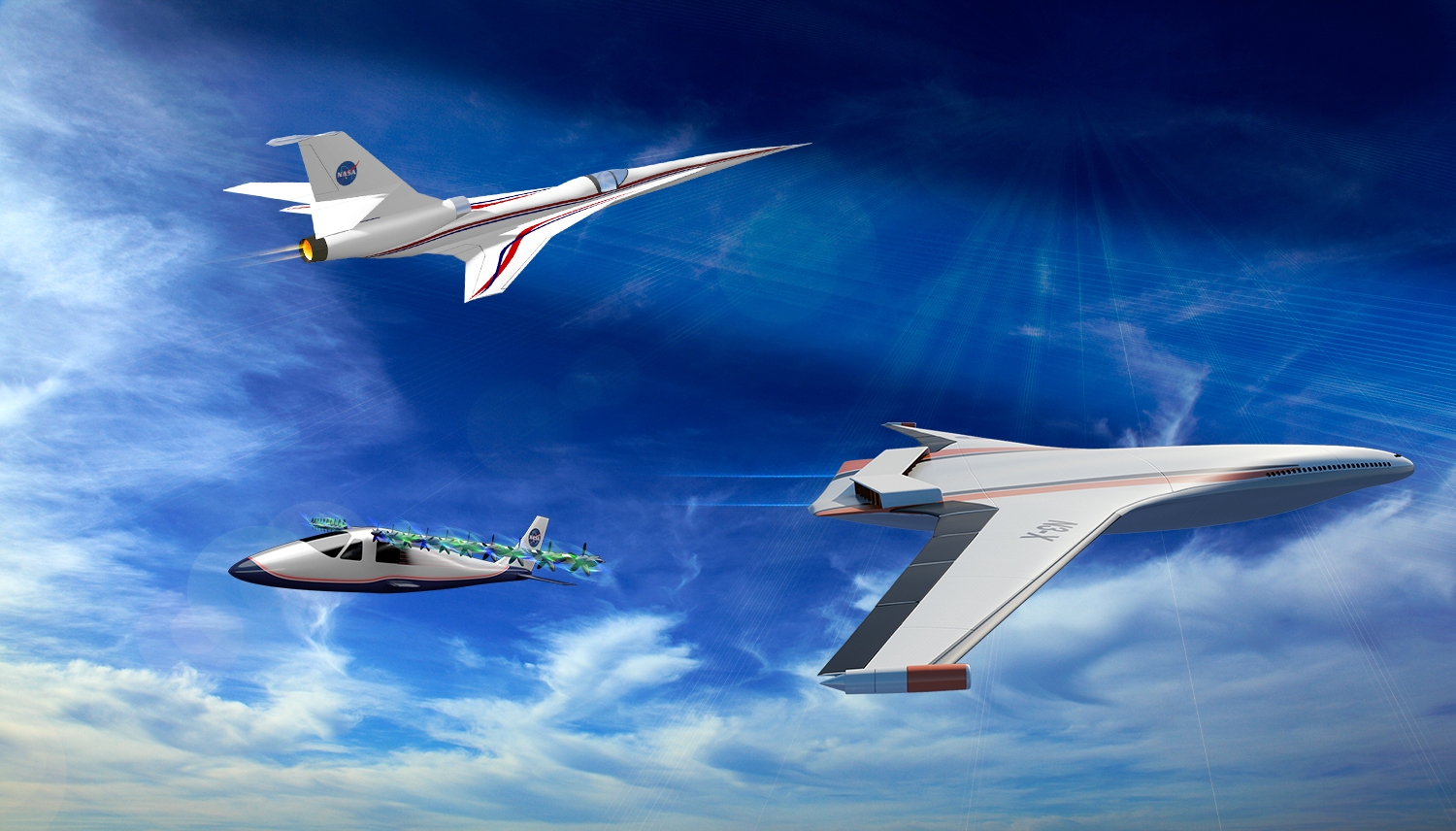
Honeywell has embarked on the second phase of a NASA-funded initiative which could help to remove some of the legislative barriers preventing overland supersonic flight.
US Federal Aviation Administration regulations have, since 1973, prohibited supersonic flight over land by civil aircraft to limit the potential nuisance of noise pollution generated by the sonic boom.
But NASA has been researching ways to ease this restriction.
In early 2015 the agency awarded Honeywell a two-year contract under its commercial supersonic technology programme to design and develop a system that will enable pilots to visualise the likely noise effects on the ground and take mitigating action.
Honeywell has taken a NASA-developed algorithm and fused this with its flight management system (FMS) to enable a visual representation of the boom’s propagation and intensity to be presented on its SmartView synthetic vision cockpit displays.
This “predictive” view is shown as a graded line projected on the aircraft’s flight path as well as a side-on vertical profile.
“It gives a pilot better information to base their routing on,” says Mark Giddings, Honeywell experimental test pilot. “If I could go down to Mach 1.1 or 1.2, and pull the boom off the ground to go over LA, I would do it.”
Honeywell in 2015 completed a series of test flights with the system installed on its Dassault Falcon 900 test aircraft to validate the algorithm. A second round of flight evaluations is planned this year as it seeks to drive “a higher level of fidelity in the FMS”.
As the Falcon travels at subsonic speed, Honeywell has had to extrapolate the data from the flight tests to predict the likely supersonic effects.
Although NASA’s programme provides for an eventual third phase, involving testing the system on a supersonic aircraft, there is no guarantee this will go ahead, says Jerry Ball, senior scientist at Honeywell.
The agency has a McDonnell Douglas F-15 which could be used for further tests, based at the Armstrong Research Center at Edwards AFB.
At the moment the development is solely a NASA programme, but Ball is hoping it will “pique the interest” of manufacturers like Aerion who are planning a new wave of supersonic business jets.
The next step, he says, is to feed in real-time weather data to the system – cold, low-pressure air transmits a sonic boom more effectively – which will further refine the technology. Terrain data could also be added, he says.
Boeing, TAROM and CDB Aviation have celebrated the delivery of the airline’s first 737‑8, marking the arrival of Romania’s first Boeing 737 MAX and a key milestone in the national carrier&...
Airbus has officially unveiled a new delivery center at its Jean‑Luc Lagardère site, northwest of Toulouse, marking a significant milestone in the industrial ramp‑up of the A320 Family. Purpose...
Boeing and American Airlines announced the successful completion of the first landing gear exchange for a 737 MAX, marking a key milestone as the company extends its longstanding Landing Gear Exchange...
As the 10th edition of the Riga Aviation Forum was getting ready to open, 50SkyShades — a long‑standing Media Partner of the event — took the opportunity to sit down with Zigmars Vestfals,...