


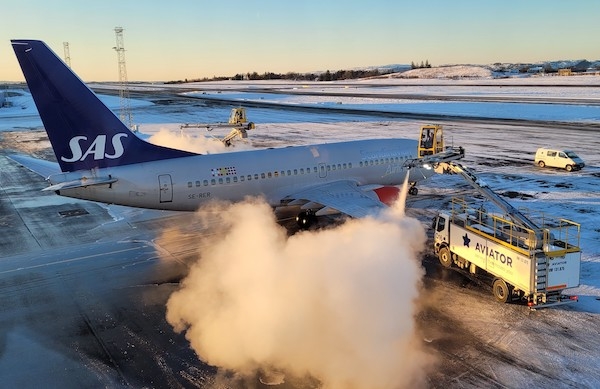
For years now, there has been an ongoing conversation about the impact that the aviation industry has on our environment. Yet recently, more and more businesses have been opening up about the other side of this unfortunate coin – climate change impact on aviation. Aviator Airport Alliance shares how changes in the climate might impact ground handling operations.
There is no denying – the climate is changing. With each passing year, the planet has been experiencing higher temperatures, increased precipitation, and extreme weather that can no longer be ignored. While steps to decrease human impact on climate have been taken, it is expected that the change cannot be reversed and industries across the board will need to adapt to the situation.
According to Magnus Soderberg, Business Improvement Director at Aviator, changes in climate can have a strong impact on the aviation industry. “Increasing temperatures can provoke a change in geographical and seasonal changes in flight demand, impact aircraft performance, call for increased cooling and heating requirements and even cause structural issues to airport infrastructure due to extreme heat or cold.”
Changes in temperatures and precipitation have a direct impact on ground handling companies as well, especially on their de-icing operations. “While at first glance it might look like increasing temperatures will simply call for a decrease in demand for de-icing, the reality is quite different,” shares Richard Lundgren, the Head of De-Icing Division at Aviator. “Warming temperatures also have a great impact on the amount and specifics of precipitation that can affect the difficulty of de-icing operations. For example, frozen rain can cause plenty of troubles to the ground handling staff.”
De-icing procedures are extremely important to ensuring the safety of aircraft and thereby the safety of the flight. “Aircraft’s wings and rear tail component are shaped in a specific way in order to provide lift for flight. Snow and ice on these areas can alter their shape, disrupting the airflow across the surface and hindering the ability to create proper lift,” explained Richard Lundgren. “Due to increased temperatures, the de-icing procedures become more challenging. The outside air temperature tends to be pending around 0 degrees Celsius and this often leads to more freezing contamination e.g., the water turns into ice. Normally these types of contaminations demand more fluids and longer treatments to get rid of, causing increased demand for qualified staff and additional costs.”
To ensure the continuation of operations regardless of the changing climate, the businesses have to begin preparations in advance. “To keep up with the changes we have been reviewing our sourcing and stock of de-ice fluid as well as looking into possible mitigating actions, such as new potential partnerships. While we can’t stop climate change entirely, we can invest in eco-friendly machinery and practices as well as prepare ourselves as best as possible to continue business in these changing times. We have to ensure that our qualified team is ready and that we have sufficient infrastructure to handle the higher demand,” explained Magnus Soderberg.
Global Jet Capital has released its sixth annual Business Jet Market Forecast, outlining a confident outlook for the sector. The updated analysis anticipates steady expansion over the next five years,...
Uzbekistan Airways and Lufthansa Technik have renewed their cooperation with a long‑term agreement extending comprehensive component support for the airline’s Boeing 787 Dreamliner and Airbus A3...
As the 10th edition of the Riga Aviation Forum was getting ready to open, 50SkyShades — a long‑standing Media Partner of the event — took the opportunity to sit down with Zigmars Vestfals,...
Drukair – Royal Bhutan Airlines, the national flag carrier of the Kingdom of Bhutan, has announced its decision to equip five Airbus A320neo‑family aircraft with CFM International LEAP‑1A engine...