


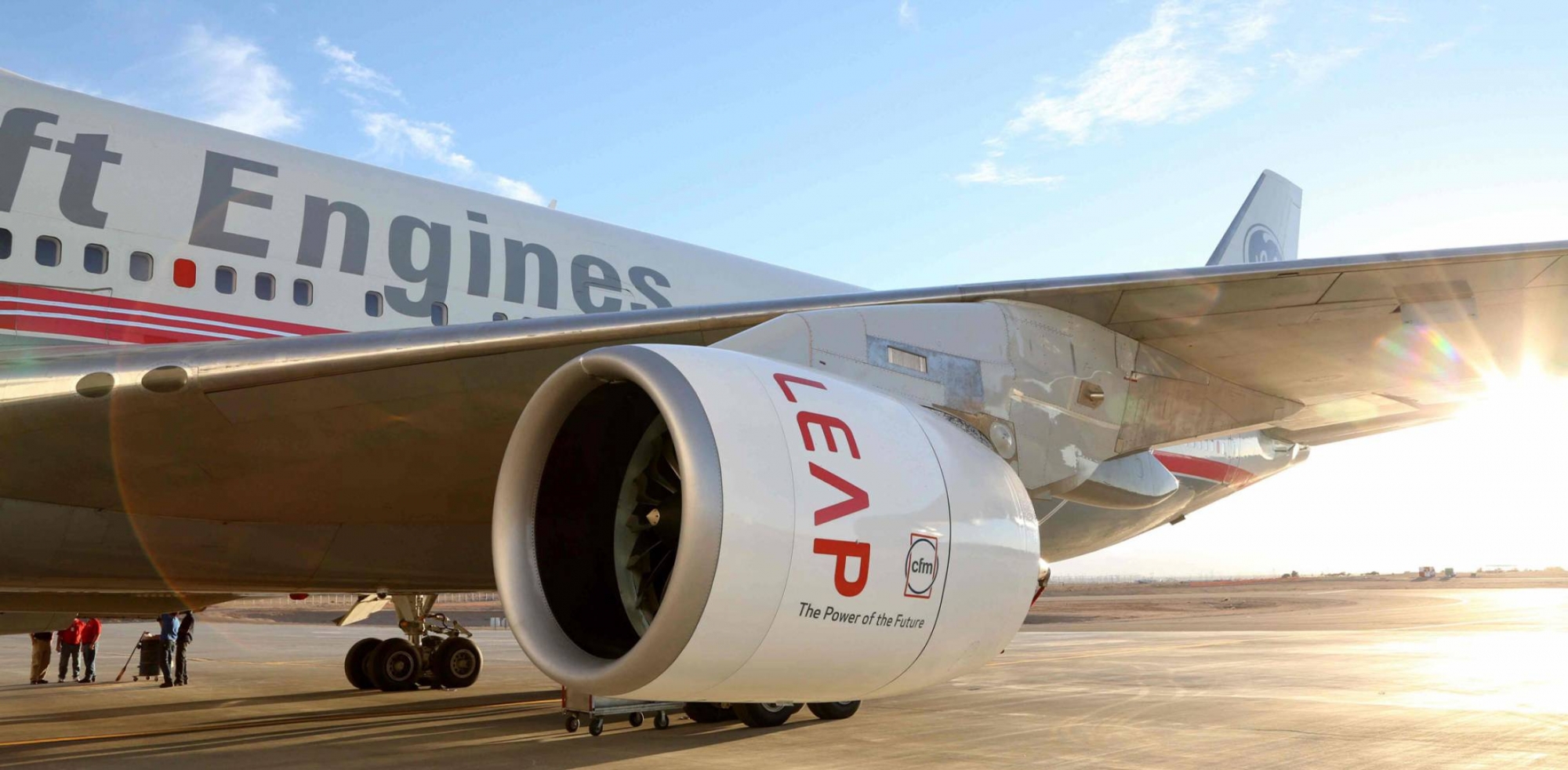
CFM International’s advanced LEAP-1C integrated propulsion system was today simultaneously awarded Type Certificates by both the European Aviation Safety Agency (EASA) and the U.S. Federal Aviation Administration (FAA), paving the way for entry into commercial service on the COMAC C919 aircraft.
CFM is unique in that it is the only engine manufacturer to gain dual original certification from both agencies, rather than one lead agency issuing a type certification and the second agency validating that certification. This reflects CFM’s 50/50 design and production structure between parent companies GE and Safran, which has been so successful for more than 40 years.
“It has been an incredible year for the LEAP program, culminating in the certification of the third model in this engine family,” said Allen Paxson, executive vice president for CFM. “Everyone, from the project and engineering teams to manufacturing and our suppliers, has done an incredible job of keeping this program on schedule and building an engine that is delivering everything that we have promised.”
The LEAP engine was officially launched in December 2009 when COMAC selected the LEAP-1C as the sole Western powerplant for its 150-passenger C919 airplane. The engine incorporates a unique fully integrated propulsion system (IPS).
“It has been a real pleasure working in close coordination with COMAC on this program,” said Francois Bastin, executive vice president for CFM. “The LEAP-1C is the only model for which CFM provides a totally integrated propulsion system that includes the engine, nacelle, and thrust reverser. The IPS, along with the pylon developed by COMAC, were all designed in conjunction with each other. As a result, the LEAP-1C features improved aerodynamics, lower weight, and easier maintenance. We think that our customers are going to be pleased with the airplane/engine combination.”
The LEAP-1C thrust reverser was developed by Nexcelle, a joint venture between Safran Nacelles and GE Aviation’s Middle River Aircraft Systems (MRAS).
In addition to the IPS, the LEAP-1C engine features some of the industry’s most advanced technologies, including 3-D woven carbon fiber composite fan blades and fan case; a unique debris rejection system; 4th generation three dimensional aerodynamic designs; the Twin-Annular, Pre-Swirl (TAPS) combustor featuring additively manufactured fuel nozzles; ceramics matrix composite shrouds in the high-pressure turbine; and titanium aluminide (Ti-Al) blades in the low-pressure turbine.
The first LEAP-1C engine successfully completed a flight test program in late 2014 on a modified 747 flying testbed at GE facilities in Victorville, California. In November 2015, the first C919 rolled out at COMAC facilities in Shanghai. More recently, COMAC successfully started the engines for the first time in early November 2016, running them for 10 minutes at ground idle power at the company’s Shanghai Pudong International Airport facility.
The LEAP engines currently in commercial service are providing operators with double-digit improvements in fuel consumption and CO2 emissions compared to today’s best CFM engine, along with dramatic reductions in engine noise and exhaust gaseous emissions. All this technology brings with it CFM’s legendary reliability and low maintenance costs.
Global trade body The Air Charter Association (The ACA) celebrated another record‑setting edition of Air Charter Expo (ACE’26) on Tuesday, 8 September 2026, delivered in partnership with Busines...
Electra and The Atlas Group today announced a landmark airframe agreement for the EL9 Ultra‑Short aircraft, uniting Electra’s next‑generation design with Atlas’s established aerospace manu...
Honda Aircraft Company announced the completion of the first wing structure for the HondaJet Echelon test aircraft, marking a pivotal advancement in the program and moving the new light‑jet platform i...
KVE by Daher is marking its 30th anniversary with the inauguration of a significant expansion of its production facility in The Hague — a development that signals the start of a new acceleration...