


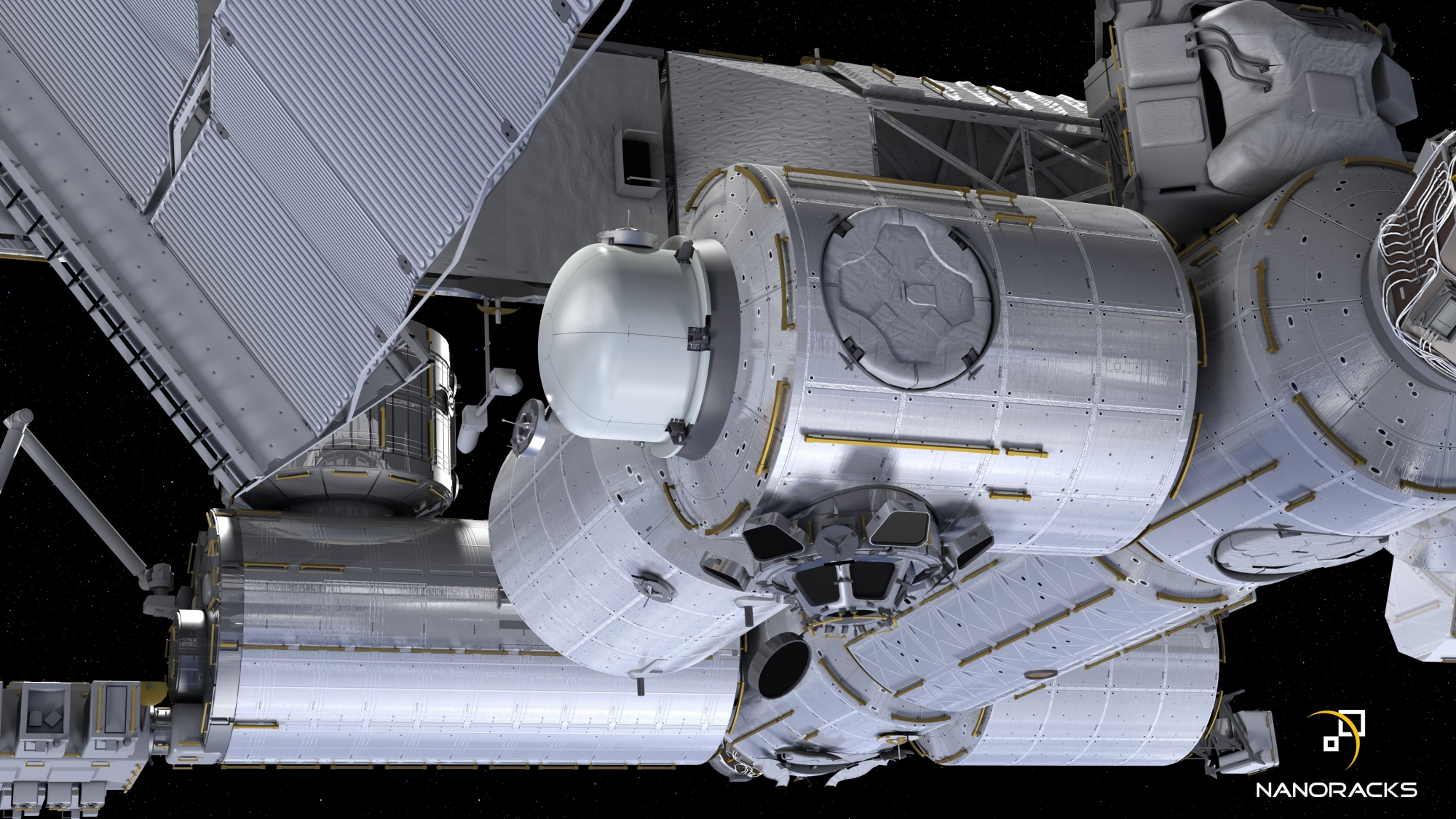
Boeing and NanoRacks LLC will partner to develop the first privately funded commercial airlock, enabling the United States to potentially triple the number of small satellites it can deploy from the International Space Station (ISS) during a single airlock cycle.
The NanoRacks Airlock Module, which is planned to be attached to the ISS U.S. segment in 2019, will increase the capability of transferring equipment, payloads and deployable satellites from inside the ISS to outside, significantly increasing the utilization of ISS.
ISS prime contractor Boeing will build and install the airlock’s Passive Common Berthing Mechanism, the hardware used to connect the pressurized modules of the ISS.
Currently, the United States utilizes the airlock on the ISS Japanese Experiment Module. This new commercial airlock will be larger and more robust to better handle increasing market requirements.
“The installation of NanoRacks’ commercial airlock will help us keep up with demand,” said Boeing International Space Station program manager Mark Mulqueen. “This is a big step in facilitating commercial business on the ISS.”
“We are entering a new chapter in the space station program where the private sector is taking on more responsibilities. We see this as only the beginning and are delighted to team with our friends at Boeing,” said Jeffrey Manber, CEO of NanoRacks.
Boeing and American Airlines announced the successful completion of the first landing gear exchange for a 737 MAX, marking a key milestone as the company extends its longstanding Landing Gear Exchange...
Electra and The Atlas Group today announced a landmark airframe agreement for the EL9 Ultra‑Short aircraft, uniting Electra’s next‑generation design with Atlas’s established aerospace manu...
Just two months after acquiring VoltAero’s assets, AURA AERO has returned the Cassio S hybrid‑electric demonstrator to the skies at Rochefort Airport—now flying under its new name, X‑VOLT....
Drukair – Royal Bhutan Airlines, the national flag carrier of the Kingdom of Bhutan, has announced its decision to equip five Airbus A320neo‑family aircraft with CFM International LEAP‑1A engine...
Honda Aircraft Company announced the completion of the first wing structure for the HondaJet Echelon test aircraft, marking a pivotal advancement in the program and moving the new light‑jet platform i...