


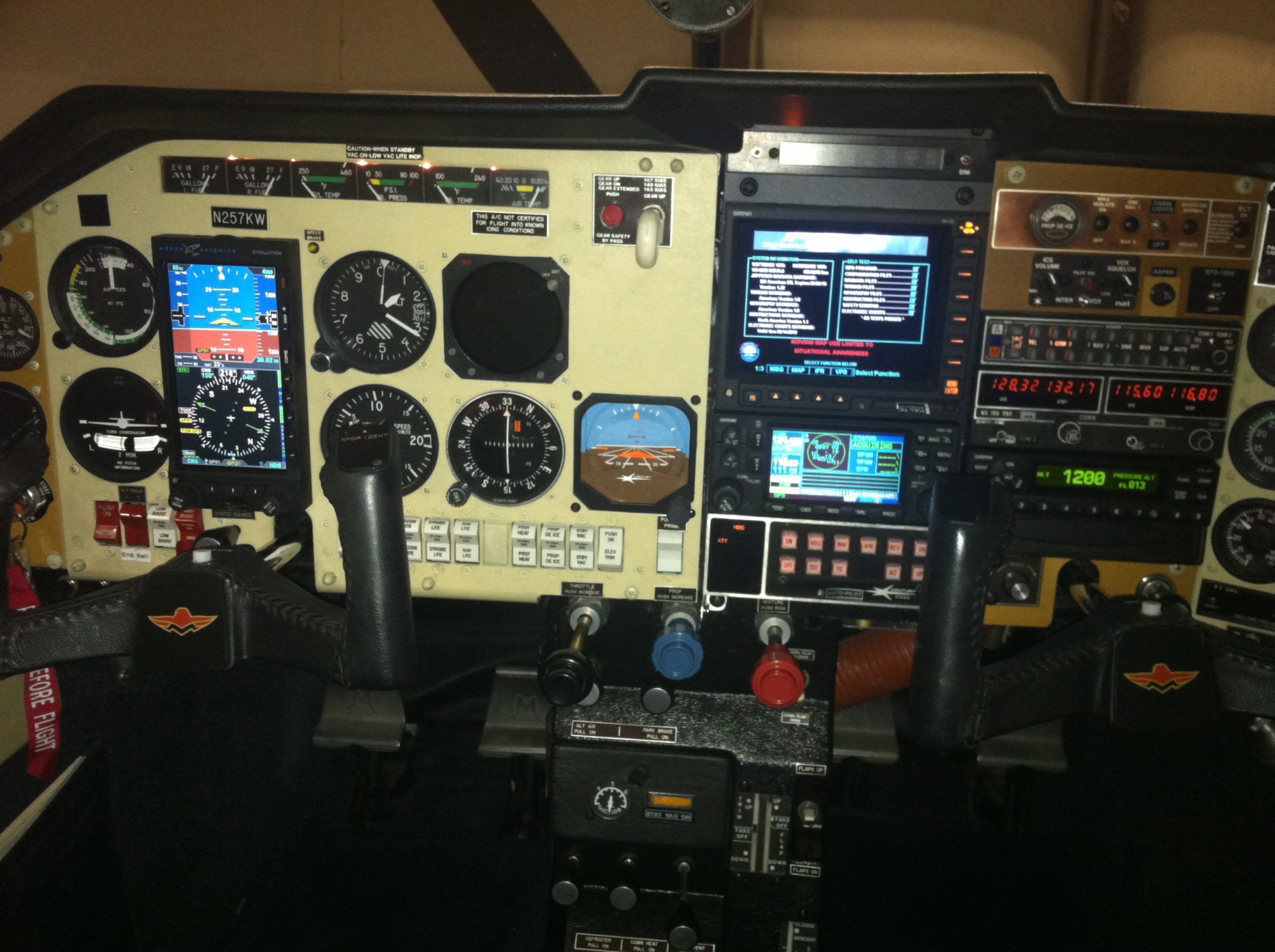
In a new policy statement, the FAA announced that electronically driven attitude indicators can directly replace vacuum-driven attitude indicators in aircraft flown under VFR and IFR. The installation can be done as a minor alteration.
Under a strict interpretation of the applicable regulations, the previous policy sometimes required installation of an independent standby attitude instrument as a backup for electronic flight instrument systems, or a vacuum system with vacuum-driven instruments to act as backups. Under the new policy, the FAA is allowing direct replacement of vacuum-driven attitude indicators with electronically driven attitude indicators because the electronic type is far more reliable.
According to the FAA, “The FAA’s Safer Skies initiative from 2001 identified vacuum system failures as a significant cause of or contributor to fatal accidents in instrument meteorological conditions (IMC). The study showed vacuum systems have a high failure rate and the failures tend to be insidious because [the devices] degrade slowly, making the potential for failure difficult to recognize. Additionally, data indicates that pilots may not have the proficiency to recover and land the airplane, in spite of instrument-rated pilots receiving partial-panel training.”
The FAA added that mean time between failure of vacuum-driven attitude indicators “is only a few hundred hours.” And vacuum pumps can fail after as little as 500 hours. “Electronically driven attitude indicators eliminate this type of failure. In addition, they provide more precise attitude indication, greater internal error-checking ability and internal redundancy, improving functionality over vacuum-driven attitude systems.”
To install the new electronic attitude indicator, some conditions must be met. These include the need for a backup and independent standby battery to power the new indicator; the new indicator must fit into the same location as the indicator it is replacing and be set to indicate level flight; only minor changes to the electrical system and vacuum connections required; and the new instrument must be powered from a new dedicated circuit breaker.


flydubai unveiled the launch of its dedicated freighter operations, a dynamic expansion that advances the airline’s diversification strategy and further elevates Dubai’s standing as a glob...
Drukair – Royal Bhutan Airlines, the national flag carrier of the Kingdom of Bhutan, has announced its decision to equip five Airbus A320neo‑family aircraft with CFM International LEAP‑1A engine...
Qantas has inaugurated its new Product Innovation Centre in Adelaide, with South Australian Premier Peter Malinauskas joining Qantas Group Chief Technology, AI and Transformation Officer Rachel Yangoy...
Samson Sky, developer of the Switchblade Flying Car, announced it has secured an $80 million investment from Dubai‑based Matin Group. According to Sam Bousfield, CEO, Founder...